
Battery Energy Storage Systems
(BESS)
What Are Battery Energy Storage Systems (BESS)
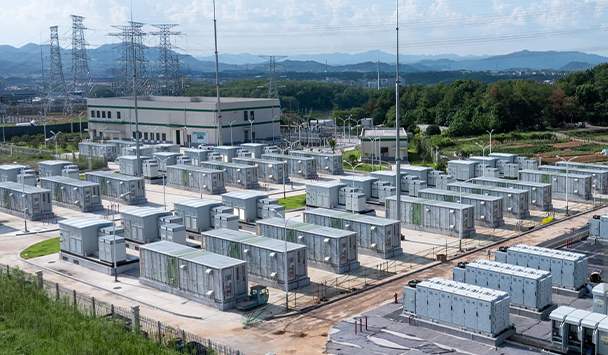
Battery energy storage systems (BESS) play an essential role in integrating and accelerating renewable energy deployment. By helping to balance energy supply with demand, Energy storage greatly improves the efficiency of renewable sources and allow maximal renewable energy penetration into the energy network. Energy storage can provide support services to the electricity grid, or to an individual consumer behind-the-meter. Energy storage may be deployed as stand-alone systems or with power generation as part of a hybrid energy system or microgrid scheme.
Energy storage is flexible, dispatchable and readily deployable at electricity grid level. This means energy storage systems can help to support grid services such as frequency response, shedding, adding and voltage stabilisation effectively and ‘almost’ instantaneously. Unexpected events such as extreme weather incidents, technical failures or even pandemics can put their toll on the power network. Energy storage technologies can support operational resilience. Energy storage systems can be used as an alternative to back-up generators such as diesel-based systems to improve the emissions performance of an industrial or commercial facility.
Why Powermax Energy for BESS?
Powermax Energy is a multinational power generation business, delivering complex energy schemes backed by strong balance sheet and aftersales service support. We work with a range of different battery energy storage system assemblers and can deliver them as part of a grid connected energy storage plant or a behind the meter hybrid or microgrid application.
Microgrids and Hybrid Energy Systems
Powermax Energy’s flexible approach to energy solutions allows us to combine the benefits of instantaneous battery response with the longevity of a gas engine, whilst also balancing with renewable power generation for complete site optimisation.
Battery energy storage systems can be deployed as part of a hybrid power plant in parallel with other technologies such as solar wind, heat pumps, thermal stores. These hybrid systems can be managed by an advanced microgrid control and optimisation systems.