

Every year, millions of tons of organic waste end up in landfills, releasing methane—a greenhouse gas 25 times more potent than CO₂. But what if that waste could become your most reliable energy source? Biogas generators turn animal manure, food scraps, crop residues, and wastewater sludge into renewable electricity and heat, cutting emissions and energy costs at the same time.
In this guide, you’ll learn exactly how biogas generators work, the different types available (from home digesters to industrial 2 MW power plants), what biogas generator efficiency really means, and how to choose a commercial biogas generator set for your farm, factory, or facility. By the end, you’ll know what to look for in a high-performance biogas power generation system — including our industrial generator sets (400 kW to 2000 kW) that we manufacture for real-world applications.
1. What Is a Biogas Generator?
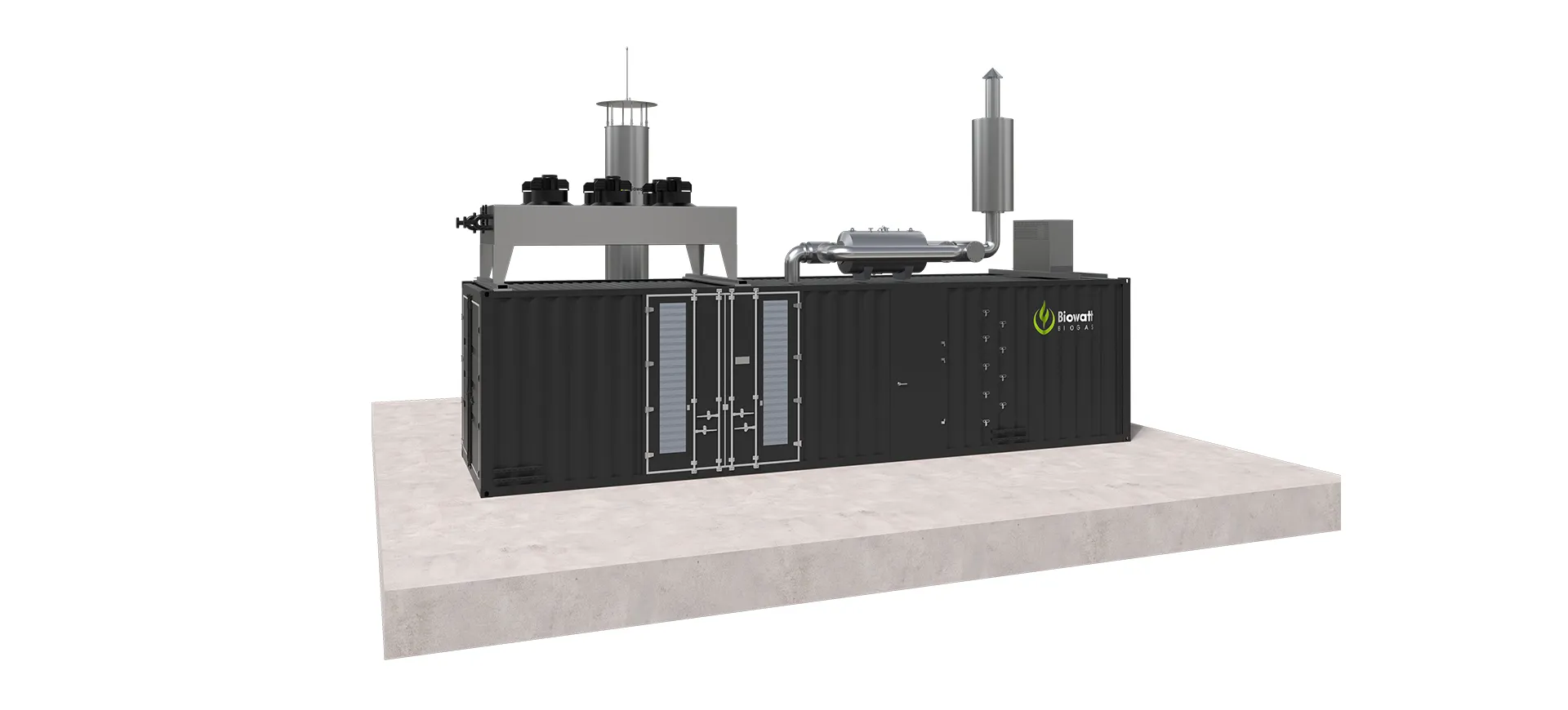
A biogas generator (often called a biogas generator set or biogas gen-set) is a system that converts organic waste into electricity and usable heat. It combines two main parts:
Anaerobic digester – an airtight tank where bacteria break down organic matter without oxygen, producing raw biogas (mainly methane and CO₂).
Gas engine + alternator – a combustion engine specially designed to run on biogas, which drives a generator to produce electricity.
When heat from the engine coolant and exhaust is recovered, the system becomes a biogas CHP generator (combined heat and power), achieving total efficiency above 85–90%.
2. How Does a Biogas Generator Work? (Step-by-Step)
Keywords: how does a biogas generator work, how do biogas generators work, how is biogas generated
Step 1 – Feedstock Preparation
Organic waste (manure, food waste, crop residues, sewage sludge) is mixed with water to create a pumpable slurry. Large solids should be pre-shredded to increase the surface area for bacteria.
Step 2 – Anaerobic Digestion (Four Key Phases)
The slurry enters a sealed, oxygen-free digester where multiple groups of bacteria work in sequence. This process has four distinct phases:
| Hydrolysis | Complex molecules (fats, proteins, carbohydrates) are broken down into simpler sugars, amino acids, and fatty acids. |
| Acidogenesis | Simple organic compounds are further converted into volatile fatty acids, alcohols, hydrogen, and CO₂. |
| Acetogenesis | Fatty acids are converted into acetic acid, along with additional hydrogen and CO₂. |
| Methanogenesis | Methanogenic archaea convert acetic acid, hydrogen, and CO₂ into methane (CH₄) and CO₂ – this is the biogas. |
The gas collected at the top of the digester is raw biogas, typically containing 50–70% methane (CH₄), 30–50% CO₂, plus trace amounts of hydrogen sulfide (H₂S) and water vapor. For comparison, natural gas has about 1000 BTU/ft³, while biogas ranges from 500–700 BTU/ft³, which is why engines must be specifically adapted.
Step 3 – Gas Cleaning (Recommended)
Raw biogas should be treated before entering the generator engine:
Dehydration – removes water vapor to prevent corrosion.
Desulfurization – removes corrosive H₂S (target below 200–500 ppm for engine safety).
Particulate filtration – removes fine solids.
Step 4 – Combustion & Power Generation
Cleaned biogas is fed into a spark-ignited gas engine (lean-burn or rich-burn). The engine turns an alternator to produce electricity. Modern industrial engines use electronic controls (e.g., Woodward) and pre‑chamber lean‑burn technology to achieve high electrical efficiency. Our 190 and 300 series (400 kW to 2000 kW) employ this exact technology, reaching up to ≥40% electrical efficiency in the 300 series.
Step 5 – Heat Recovery (CHP)
Up to 50% of the energy in biogas can be recovered as heat from the engine jacket water and exhaust. This thermal energy can warm digesters, heat buildings, or supply process heat, turning a simple power plant into a biogas CHP generator with combined efficiency over 85%.
Step 6 – Byproduct: Digestate as Fertilizer
The residue leaving the digester is called digestate. It is rich in nitrogen, phosphorus, and potassium – essential plant nutrients – and has greatly reduced odor and pathogens. Digestate can be separated into a solid fraction (used as bedding or compost) and a liquid fraction (used as liquid fertilizer). This closes the nutrient loop and adds another revenue stream for farms and waste treatment plants.
3. Types of Biogas Generators (By Scale)
Not all biogas generators are the same. The right type depends on your waste volume and energy demand.
| Home / Mini Biogas | 1–20 kW | Households, small farms (cooking, lighting) |
| Small Commercial | 30–200 kW | Medium dairy, food processing, local waste |
| Industrial Biogas Generator Sets | 400 kW – 2 MW+ | Large farms, wastewater treatment, landfill, industrial CHP |
For applications above 400 kW, you need a robust, containerized solution that can run 24/7, handle varying methane content, and meet grid codes. That’s exactly where our generator sets – the 190 series (400–1000 kW) and 300 series (1000–2000 kW) – are designed to excel.
4. Key Applications of Biogas Generators
Target keywords: biogas power generation, biogas electricity generation, onsite gas generator for biogas
Agricultural farms – dairy, pig and poultry manure → electricity + bedding/fertilizer.
Food & beverage plants – fruit/vegetable waste, brewery effluent → power for own facility.
Municipal wastewater treatment – sewage sludge digestion to power plant operations.
Landfill gas recovery – converting fugitive methane into grid electricity.
Industrial CHP – replace diesel or propane boilers with biogas-fired engine + heat recovery.
An onsite gas generator for biogas means you don’t need a pipeline – you generate power right where you have the waste.
5. Biogas Generator Efficiency: What You Need to Know
Target: biogas generator efficiency, biogas chp generator, electrical efficiency of biogas generator
Efficiency is usually expressed as “electrical efficiency” (how much fuel energy becomes electricity) and “total CHP efficiency” (electricity + useful heat).
Typical spark-ignited biogas engines: 35–42% electrical efficiency.
Lean-burn engines with pre-chamber (our 300 series): ≥40% electrical efficiency at full load.
CHP efficiency: adding heat recovery pushes total efficiency to 85–92%.
Fuel consumption estimate: roughly 0.5 Nm³ of biogas (55% CH₄) produces 1 kWh of electricity. Higher methane content improves efficiency.
Efficiency comparison table (industrial class)
| 190 series (naturally aspirated) | 400–550 | ~36–38% | ✓ |
| 190 series (turbocharged) | 600–1000 | ~38–40% | ✓ |
| 300 series (L-8, intercooled) | 1000–2000 | ≥40% | ✓ |
6. How to Choose the Right Biogas Generator Set
Target keywords: commercial biogas generators, biogas generator set, how to choose a biogas generator
6.1 Feedstock Assessment (Critical First Step)
Your biogas yield and quality depend entirely on what you put into the digester. Evaluate:
Feedstock type – manure, food waste, crop residue, wastewater sludge. Different digesters work best with different solid contents.
Daily volume – consistent, continuous supply is ideal. Batch systems produce gas in pulses.
Total solids content – below 10% suits wet digestion; above 15% requires dry digestion.
Co-digestion potential – mixing multiple feedstocks often increases biogas yield.
Recommendation: Perform a BMP test (Biochemical Methane Potential test) on your feedstock. This lab analysis gives you a realistic estimate of how much biogas your specific waste will produce, allowing accurate generator sizing.
6.2 Other Decision Factors
Power requirement – base load vs. peak, grid export or island mode.
Voltage & frequency – we support 50Hz/60Hz, 0.4kV up to 13.8kV, also 220V, 480V, 6300V, etc.
CHP need – do you need hot water, steam, or building heating?
Installation footprint – containerized gensets reduce civil works to a minimum.
After-sales support – spare parts availability, remote monitoring, warranty.
Site conditions – ambient temperature (digestion slows below 20°C), altitude (engine derating above 1500m).
Our generator sets are fully factory-tested, skid‑mounted, and containerized. No civil works – just unload, connect gas/water/wiring, and start generating within days.
7. Biogas Generator Cost & ROI
Target: biogas generator price, biogas generator cost, biogas electric generator price (commercial intent)
Industrial biogas generator prices vary based on power, engine brand, emissions package, and accessories. As a rough guide:
400–500 kW unit: $500–$700/kW
1000 kW unit: $450–$650/kW
2000 kW unit: $400–$550/kW
Payback periods for farms and industry typically range from 3 to 7 years, depending on local electricity prices, incentive programs, and waste disposal savings. Contact us for a custom quote based on your biogas analysis and power needs.
8. Frequently Asked Questions (FAQ)
Can you run a generator on biogas?
Yes. Specially designed spark‑ignited gas engines run very well on biogas, provided the gas is cleaned of H₂S and moisture. Many industrial biogas generator sets are designed for 24/7 operation.
How much biogas is needed to run a generator?
Approximately 0.5 Nm³ of biogas (55% CH₄) produces 1 kWh of electricity. A 500 kW generator running at full load requires about 250 Nm³/h of biogas.
What is the lifespan of a biogas generator?
With proper maintenance (oil changes, spark plugs, gas filters), industrial biogas engines can run 60,000–80,000 hours before major overhaul, equivalent to 7–10 years of continuous operation.
Can I use biogas in a diesel generator?
A standard diesel generator cannot run on pure biogas. However, dual‑fuel conversions (diesel + biogas) are possible, but for best efficiency and emissions, a dedicated lean‑burn gas engine is recommended.
Do biogas generators need special maintenance?
Yes – regular checks of the gas treatment system (H₂S removal, moisture traps), engine oil changes, spark plug replacement, and valve lash adjustments. Our generator sets include remote monitoring for predictive maintenance.
Why is digestate important?
Digestate is the nutrient-rich residue left after anaerobic digestion. It contains nitrogen, phosphorus, and potassium and can be used as organic fertilizer, reducing the need for synthetic fertilizers and closing the nutrient loop on farms.
9. Why Choose Our Industrial Biogas Generator Sets?
We specialize in heavy‑duty, high‑efficiency biogas generator sets for the industrial market. Here’s what makes our 190 and 300 series stand out:
Power range: 400 kW – 2000 kW (multiple paralleling for >10 MW).
High electrical efficiency: up to ≥40% (300 series lean‑burn).
Proven engine technology: 12V190 (V12) and 8300 series (L8) with Woodward electronic control and pre‑chamber lean‑burn.
Voltage & frequency flexibility: 50Hz/60Hz, 220V / 400V / 480V / 6300V / 6600V / 10.5kV / 13.8kV.
Containerized / skid‑mounted: no civil works, 7–10 day installation.
Global support: OEM spare parts, remote monitoring, and commissioning assistance.
Thousands of units have been deployed worldwide in farms, biogas plants, landfills, and industrial CHP projects. We are ready to help you turn your organic waste into a profitable power source.
10. Conclusion
Biogas generators are a proven, mature technology that turns waste disposal costs into energy revenue. Whether you need a small farm unit or a 2 MW industrial biogas CHP generator, the key is matching the generator set to your biogas quality and load profile.
For industrial applications above 400 kW, our 190 and 300 series offer the efficiency, durability, and flexibility you need. Contact us today with your biogas flow rate (Nm³/h) or required power – we’ll provide a complete solution including gas pre‑treatment, generator, and optional heat recovery.