

Introduction
A biomass power plant converts organic materials such as wood chips, rice husks, straw, sawdust, and other agricultural or forestry residues into electricity. Depending on the technology used, biomass may be burned directly to release heat or converted into combustible gas before power generation.
Understanding these different routes helps project developers evaluate which type of biomass power plant is better suited to their feedstock, power demand, and operating conditions.
What Is a Biomass Power Plant?
A biomass power plant is a facility that converts the chemical energy stored in organic materials into electrical energy.
Unlike conventional power plants that mainly use fossil fuels, biomass plants use renewable or recoverable materials such as wood residues, agricultural waste, and other organic by-products.
The basic process is:
- Biomass → Energy Conversion → Power Generation → Electricity
Biomass must first go through an energy conversion process before electricity can be generated. Depending on the plant design, it may be burned to produce thermal energy or converted into combustible biomass gas or syngas.
A complete biomass power generation solutions therefore includes more than the power generation unit. It may also include feedstock storage and handling equipment, biomass conversion systems, gas cleaning or thermal systems, electrical equipment, and plant controls.
The exact configuration depends on the biomass resource, selected technology, required power output, and project conditions.
How Does a Biomass Power Plant Work?
Although biomass power plants can use different technologies, the overall process usually follows several basic stages:
- Biomass Feedstock → Preparation → Energy Conversion → Power Generation → Electricity
1. Biomass Feedstock Is Collected and Prepared
Common biomass fuels include wood chips, rice husks, sawdust, straw, forestry residues, and agricultural residues.
Before entering the conversion system, biomass may need to be crushed, screened, dried, or otherwise prepared. The purpose is to provide a more consistent fuel for stable plant operation.
2. Biomass Is Converted into Usable Energy
The conversion stage depends on the technology.
In a biomass combustion system, biomass is burned and the stored chemical energy is released mainly as heat.
In a biomass gasification system, biomass is converted under controlled conditions into combustible biomass gas or syngas.
This is the main difference between the two power generation routes.
3. Energy Is Converted into Electricity
The usable energy produced in the previous stage is then converted into electricity.
In a combustion-based system, thermal energy is used within the power generation process.
In a gasification-based system, the produced gas is cleaned and conditioned before being supplied to a suitable gas engine. The engine produces mechanical power, which drives an alternator to generate electricity.
The electricity may be used by industrial facilities, agricultural processing plants, off-grid sites and microgrids, or supplied to the public grid.
Main Biomass Power Generation Technologies
Biomass power plants do not all use the same conversion process. Two important routes are biomass combustion and biomass gasification.
Both convert biomass into usable energy, but the intermediate energy form and plant configuration are different.
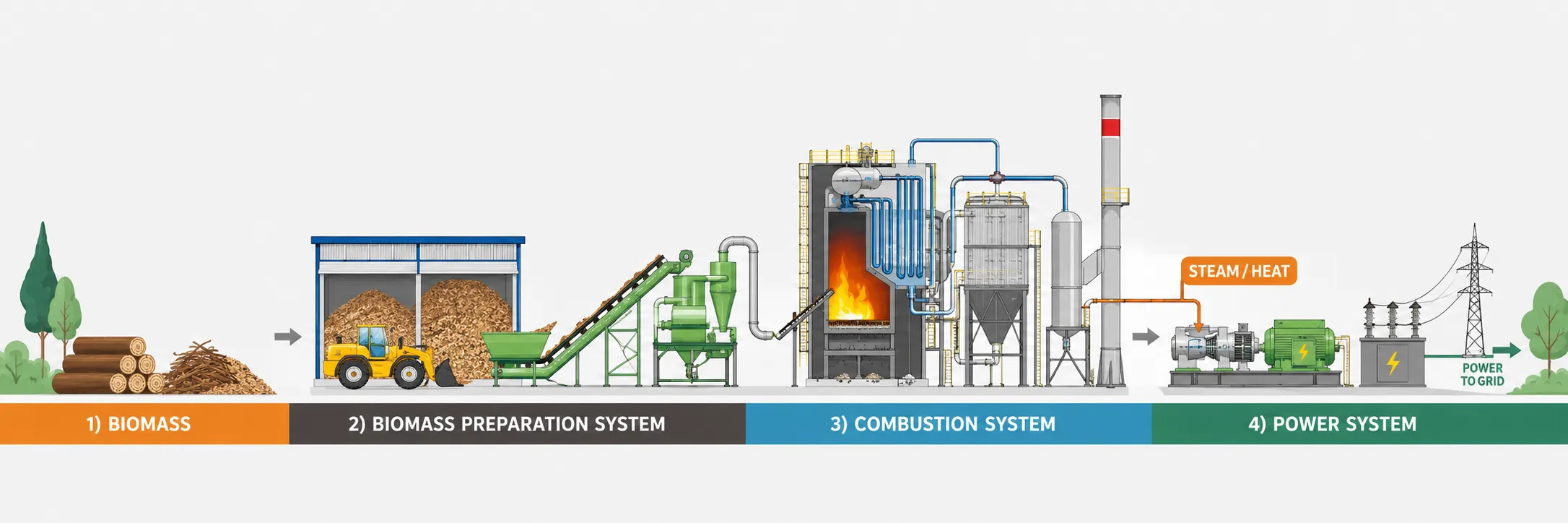
Biomass Combustion Power Generation
Biomass combustion uses direct burning to release the energy stored in biomass.
The basic process is:
- Biomass → Combustion → Thermal Energy → Power Generation → Electricity
During combustion, biomass reacts with sufficient oxygen and releases heat. This thermal energy is then used by the power generation system to produce electricity.
Combustion performance depends partly on fuel characteristics. Biomass with excessive moisture, high ash content, or inconsistent quality may require additional preparation or a system designed specifically for those conditions.
The technology should therefore be selected according to the actual biomass resource rather than assuming that all biomass fuels will behave in the same way.
Biomass Gasification Power Generation
Biomass gasification follows a different route.
Instead of fully burning the biomass, the material is converted at high temperature under controlled gasification conditions. This produces a combustible gas that can be used for power generation.
The typical process is:
- Biomass → Gasification → Biomass Gas / Syngas → Gas Cleaning → Gas Engine → Generator → Electricity
Raw biomass gas may contain dust, tar, moisture, and other impurities, so gas cleaning and conditioning are important before the gas enters the engine.
Once the required gas quality is achieved, the gas can fuel suitable gas engine generator sets designed for qualified gaseous fuels.
Gasification projects therefore require the gasifier, gas treatment system, and engine generator set to operate as one integrated system.

Biomass Combustion vs Gasification: What Is the Difference?
The main difference is how the biomass is converted into usable energy.
In combustion, biomass is burned directly and its energy is released mainly as heat.
In gasification, biomass is first converted into combustible gas, which is then used for power generation.
| Factor | Biomass Combustion | Biomass Gasification |
| Main process | Direct burning | Conversion into combustible gas |
| Intermediate energy | Thermal energy | Biomass gas / syngas |
| Power generation route | Thermal power generation | Gas engine generation |
| Important fuel factors | Moisture, ash and fuel consistency | Moisture, particle size, ash and gasification characteristics |
| Main system focus | Combustion and thermal system | Gasifier, gas cleaning and engine matching |
Neither technology is automatically better for every project.
The right choice depends on the available biomass, required power output, and overall operating conditions. Instead of asking only “Which technology is better?”, project developers should ask:
“Which technology best matches the biomass resource and the energy requirements of the project?”
Understanding the conversion technology is only part of planning a biomass power plant. Feedstock availability, equipment configuration, plant performance, and long-term operation also need to be considered.
What Fuels Can a Biomass Power Plant Use?
Biomass power plants can use many types of organic material, but the important question is not simply whether a material is biomass. It is whether that material is suitable for the selected power generation system.
Wood Chips and Forestry Residues
Wood chips, branches, and forestry residues can provide a useful fuel source in regions with forestry and wood-processing activities.
Fresh wood may contain significant moisture, so drying or suitable storage may be needed before use.
Rice Husk
Rice husk is widely available in rice-producing regions and can provide a concentrated fuel source around large rice mills.
Its fuel characteristics differ from woody biomass, particularly in ash content, so the conversion system needs to be selected accordingly.
Straw and Agricultural Residues
Wheat straw, corn stalks, and other crop residues can also be used for power generation.
Because these materials are often seasonal and relatively low in bulk density, collection, transportation, and storage need to be considered as part of the project.
Sawdust and Wood Processing Waste
Sawdust and other wood-processing residues can be attractive where they are generated continuously at sawmills, furniture factories, or similar facilities.
Using these by-products locally may reduce disposal requirements while providing a source of energy.
What Should Be Checked Before Using a Biomass Fuel?
A feedstock assessment should normally consider:
- Moisture content;
- Heating value;
- Ash content;
- Particle size;
- Contaminants;
- Available quantity;
- Seasonal supply variations.
Two projects using the same type of biomass can perform differently if fuel quality and supply conditions are different.
For this reason, feedstock assessment should take place before the plant configuration and capacity are finalized.
What Are the Main Components of a Biomass Power Plant?
A biomass power plant is an integrated system.
A simplified plant structure can be understood as:
- Feedstock Handling → Biomass Conversion → Energy or Gas Treatment → Power Generation → Electrical System
Feedstock Storage and Handling
This system receives, stores, and delivers biomass to the conversion equipment. Depending on the feedstock, it may include storage areas, silos, conveyors, crushers, screens, or drying equipment.
Biomass Conversion System
This is where biomass energy is released or converted.
In a combustion system, biomass is converted into thermal energy. In a gasification system, solid biomass is converted into combustible gas.
Energy or Gas Treatment System
The equipment used at this stage depends on the conversion route.
Gasification plants normally require gas cooling, cleaning, and conditioning before the gas enters the engine. Combustion plants require the corresponding thermal energy system needed for power generation.
Power Generation Equipment
The power generation equipment converts available energy into electricity.
In a gasification plant, for example, cleaned biomass gas can fuel a gas engine connected to an alternator.
The power generation unit should therefore be selected together with the upstream conversion system rather than as an independent piece of equipment.
Electrical and Control Systems
Switchgear, transformers, synchronization systems, protection equipment, and plant controls manage the generated electricity and connect the plant to its load or the grid.
For plants using multiple generating units, the control system also coordinates their operation.
How Efficient Is a Biomass Power Plant?
There is no single efficiency value that applies to every biomass power plant.
Efficiency depends on how effectively the complete plant converts the energy contained in biomass into useful electricity.
Important influences include fuel quality, conversion technology, equipment performance, and operating conditions.
For example, high-moisture biomass leaves less usable energy for power generation because energy is required to remove the moisture. Poor matching between different parts of the system can also reduce overall performance even if individual equipment operates efficiently.
Where both electricity and useful heat are required, heat recovery can improve overall energy utilization.
For this reason, biomass power plant efficiency should be evaluated at the system level rather than by looking only at the efficiency of one generator, gasifier, or other individual component.
What Determines the Power Output of a Biomass Power Plant?
A common project question is:
How much electricity can my available biomass generate?
The answer depends mainly on four factors:
- Available biomass quantity. The plant needs enough feedstock to support its intended operating schedule.
- Energy contained in the fuel. Different biomass resources provide different amounts of usable energy.
- Conversion efficiency. Only part of the energy contained in biomass ultimately becomes electricity.
- Operating hours. The same plant capacity can produce very different annual electricity output depending on how many hours it operates.
This means plant capacity should normally be based on the real biomass resource and expected operating schedule.
Choosing a generator capacity first and then trying to secure enough fuel afterwards can create a plant that is too large for the available feedstock.
Both daily and annual biomass availability should therefore be evaluated during early project planning.
Advantages of Biomass Power Plants
Biomass power generation is particularly useful where agricultural, forestry, or industrial biomass residues are available in stable quantities.
Instead of being left unused or treated only as waste, these materials can be converted into electricity for industrial facilities, distributed energy systems, or local grids.
Biomass power is also controllable when sufficient fuel is available, allowing electricity production to be scheduled according to operating needs.
Using locally available biomass may also reduce dependence on conventional fuels transported from other locations.
Where useful thermal energy is required, biomass power generation can be combined with heat recovery to improve overall energy utilization.
These benefits depend on suitable feedstock and proper system design rather than biomass availability alone.
What Are the Challenges of Biomass Power Generation?
The main challenge in many biomass projects is maintaining a reliable fuel supply over the life of the plant.
Agricultural residues may be seasonal, while transportation and storage can become significant where biomass must be collected from a wide area.
Fuel characteristics may also vary between deliveries, which can affect the stability of the conversion process.
The plant itself must also be designed for the selected technology. Gasification systems require appropriate gas treatment and engine matching, while other biomass systems have their own operating and maintenance requirements.
These issues should be considered during project development rather than after equipment has been selected.
A technically suitable plant with an unreliable biomass supply can still struggle to operate successfully.
How to Choose the Right Biomass Power Plant Technology
Technology selection should start with three questions:
- What biomass resource is actually available?
- This establishes which conversion technologies can handle the feedstock reliably.
- How much power is required?
- The required capacity and operating schedule determine the scale and configuration of the plant.
- How will the plant operate?
- Grid connection, operating hours, heat demand, local conditions, and maintenance capability can all influence the final design.
These factors should then be evaluated together rather than selecting individual equipment separately.
A biomass project is a complete chain:
Feedstock → Conversion → Power Generation → Electrical System → Operation
The best technology is therefore the one that works reliably across this entire chain under the actual project conditions.
Planning a Biomass Power Generation Project
Before selecting equipment, project developers should collect several basic pieces of information:
- Biomass type;
- Available quantity per day and per year;
- Basic fuel characteristics;
- Required electrical capacity;
- Expected operating hours;
- Project location;
- Grid-connected or off-grid operation;
- Thermal energy requirements, if applicable.
This information allows engineers to evaluate suitable conversion technologies, plant capacity, and equipment configuration.
Early assessment is particularly important for biomass projects because feedstock conditions vary considerably between locations. Designing a plant around actual biomass data reduces the risk of selecting equipment that cannot operate reliably with the available fuel.
Powermax Energy provides Biomass Power Generation Solutions based on project-specific feedstock, power demand, and operating requirements. We support customers in evaluating biomass resources, selecting suitable power generation technologies, and configuring integrated power generation systems for industrial and distributed energy projects.
Planning a biomass power generation project? Contact Powermax Energy with your biomass type, available quantity, and required power capacity to discuss a solution for your project.